Monday, April 15, 2013

Technology for Teens with Clear Aligners

clear aligners.Braces have traditionally been seen as a “rite of passage” for teenagers, and while most teenagers learned to “em-brace” their orthodontics, in some situations, braces were less appealing. For example, like many people, you may have old prom and homecoming photos featuring beautiful dresses, tuxedos and a mouth full of metal braces.

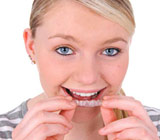
Luckily, thanks to modern technology, your teen has more options than ever before, including clear aligners. Clear aligners use a system of clear, removable trays to gradually straighten teeth. Each individual aligner is slightly different than the previous one and made of a virtually invisible plastic that completely covers the teeth. When worn for 22 hours per day for a two-week period before moving on to the next aligner, teeth can be moved into the desired position. This movement can take anywhere from 6 to 24 months, and aligners can be taken out for eating, drinking and other short periods of time.

Technology is really at its finest when it comes to Invisalign clear aligners. They are computer-generated, based on photographs, models of your teen's teeth and x-rays. The models are sent to a laboratory where a computer creates a 3D image, and we manipulate each tooth on the screen into a new position until they are all properly aligned. Special software then simulates the movement of your teen's teeth and essentially creates the course of treatment. Finally, we create plastic aligners for each step of the movement.

Technology is also responsible for making clear aligners a better option for teenagers over the past few years. Originally, teens were not seen as good candidates for clear aligners because their second molars have not fully grown into position and also because it was assumed, since the aligners are removable, teenagers might not be as diligent about wearing the aligners as adults. Technology is responsible for a solution for both of these issues. Eruption tabs serve as space-holders for teeth that haven't grown in, and clear aligners for teens have compliance indicators built-in that fade with time as each aligner is worn.

When you bring your teenager into our office for an initial consultation, we'll evaluate whether clear aligners will be an appropriate solution for his orthodontic needs.

If you would like more information about clear aligners, please contact Dr. Cindy Sumarauw at 801-281-3500 to schedule an appointment for a consultation. You can also learn more by reading the Dear Doctor magazine article “Clear Aligners for Teenagers.”


Friday, March 22, 2013

Braces Have Come a Long Way, Says Vanna White

vanna white.Everyone knows Vanna White as the elegant co-host of the popular game show Wheel of Fortune. But here's one thing you may not know: White is listed in the Guinness Book of World Records as television's most frequent clapper, with an average of 720 claps per show — that's over 28,000 per season! And here's something else: the star with the megawatt smile wore braces as a kid, and she's not too shy to talk about it.

“I only had to wear them for a year and it was a good experience for me,” she told an interviewer for Dear Doctor magazine. But when it was time for her son to get them, White noticed something different. “We used to have those silver bands that went all the way around each tooth, and they don't have that anymore. It is fascinating to see how far they have come.”

We're glad she noticed! In fact, orthodontic appliances have advanced a good deal in the past decade or so. Instead of using metal bands, brackets holding the wire part of braces are now typically attached directly to the teeth with a dental adhesive. For an even less obtrusive look, ask about using colorless brackets instead of metal ones — that way, the only part that's clearly visible is the thin wire itself. And in some situations, braces can be placed on the lingual (tongue) side of the teeth, making them all but invisible.

Another type of nearly invisible appliance is the Invisalign clear orthodontic aligner. The aligner system consists of a series of precision-made transparent “trays” that fit over the teeth. Each tray is worn for a few weeks, and each moves your teeth by a small amount; together, they can help correct mild to moderate orthodontic problems. And the best part — they're really hard to notice! That makes them perfect for both adults concerned about a “professional” look, and image-conscious teens.

So if you're a TV star — or if you'd just like to have a brighter and better smile — it's never too late to get started! If you would like more information about orthodontics, please contact Dr. Cindy Sumarauw at 801-281-3500 to schedule an appointment for a consultation. You can learn more in the Dear Doctor magazine articles “The Magic of Orthodontics” and “Clear Orthodontic Aligners.”

Wednesday, March 6, 2013

Battling Bruxism and Saving Your Teeth

biting nails.Do you clench your jaw or grind your teeth? Bite your nails? Chew on pencils or toothpicks? Or, heaven forbid, unscrew hard-to-open bottle caps using your precious pearly whites?
Over time, habits such as these — referred to in dentistry as “parafunctional” (para – outside; functional – normal) or beyond the range of what nature intended — can inflict excessive wear and tear on your teeth. Besides the impact damaged teeth can have on your smile, so called “tooth to tooth” and “tooth to foreign object” behaviors can cause physical problems, such as jaw joint and muscle pain, headaches, earaches, and even neck and back pain.

Use of Excessive Force

Parafunctional behaviors exert an abnormal amount of force on your teeth — up to 10 times the amount used for biting and chewing. Tooth grinding or “bruxism” (from the Greek word brykein – “gnash the teeth”) is particularly detrimental and is commonly seen in individuals who are experiencing a stressful time in their life. Some medications can also trigger it. Since bruxism often occurs while people sleep, it's possible to be unaware of it unless a partner comments (it can be noisy!) or a dental professional points out the tell-tale signs of wear.

To counter the adverse effects of nocturnal tooth grinding our office can create a customized night or occlusal (bite) guard. Typically fashioned from a hard, clear “processed acrylic” (wear-resistant plastic), this type of guard is amazingly inconspicuous. It is made to fit over the biting surfaces of the upper teeth only and is thinner than a dime. When it is worn, the lower teeth easily glide over the upper teeth rather than chomping into and gnashing with them, which minimizes the likelihood of erosion, chipping and uneven or excessive wear of the biting surface of the teeth. The guard is so unobtrusive, that some people even wear it as they go about their daily activities.

Remember: In addition to proper dental hygiene, you can help keep your teeth healthy by using them wisely!

If you would like more information about parafunctional habits like bruxism and ways to protect your teeth, please contact Dr. Cindy Sumarauw at 801-281-3500 to schedule an appointment for a consultation. You can also learn more about this topic by reading the Dear Doctor magazine articles “Stress & Tooth Habits” and “How And Why Teeth Wear.”

Friday, February 22, 2013

Are You at Risk for Oral Cancer?

oral cancer.Oral cancer accounts for approximately 3% of cancers in men and 2% in women. That may not sound like a lot, but the disease often isn't detected until it has progressed to its later stages when it's harder to treat and the outlook for survival is significantly diminished.

The main areas where oral carcinomas (cancers) occur are:

  • the tongue (most common location, particularly the sides and underneath)
  • the lip (especially the lower one),
  • the oral cavity (the mouth), and
  • the pharynx (back of mouth and throat).

Risk Factors You Can't Control

Even if you can't change these risks, awareness helps raise your vigilance in order to catch potential problems early when treatment options and positive outcomes are greatest.

  • Heredity
  • Aging — More than 90% of all oral cancers occur in individuals over 40. However, the incidence among younger people has been on the uptick recently, perhaps related to lifestyle behaviors.
  • Race — African Americans have a higher incidence of oral cancer than Caucasians.

Risk Factors You Can Address

  • Smoking and chewing tobacco — Smokers are at five to nine times greater risk and snuff and tobacco chewers at about four times greater risk
  • Alcohol — Moderate to heavy drinkers are at three to nine times greater risk; the higher the alcohol content, the greater the risk
  • Diet — A high intake of fruits/vegetables, which are high in antioxidants, has been found to have a protective effect against a variety of cancers, including oral.
  • Chronic sun exposure — Often connected with lip cancers.
  • Viral infections — Namely the human papilloma virus “HPV 16,” which has been linked to sexual transmission (oral sex) and cervical cancer in women.

As part of your routine oral hygiene, you should be closely monitoring any non-healing changes in your mouth (e.g., ulcers or sores, white or red patches on the tongue). And rest assured that as part of your regular check-ups, our office performs a comprehensive visual screening for signs of oral cancer.

If you would like more information about oral cancer prevention and detection, please contact Dr. Cindy Sumarauw at 801-281-3500 to schedule an appointment for a consultation. You can also learn more about this topic by reading the Dear Doctor magazine articles “Oral Cancer” and “Diet and Prevention of Oral Cancer.”

Wednesday, February 6, 2013

February is National Children's Dental Health Month

health month.All during February, we are taking part in the celebration of National Children's Dental Health Month. This annual observance is sponsored by the American Dental Association (ADA) to raise awareness of how important it is to develop good oral hygiene habits at an early age. Good dental health will promote your children's overall health and even their performance at school. According to the U.S. Surgeon General, an estimated 51 million school hours are lost per year due to dental-related illness.
To get every child off to the best possible start, we recommend that the first dental visit take place around the time of your child's first birthday. This will establish a “dental home” for your little one and allow caring professionals to respond to any issues that come up early on. Regular, semi-annual visits should follow to maintain healthy baby teeth, which in turn will have a positive affect on the permanent teeth that will replace them.

If your children are of school age, they will probably enjoy some of the games, puzzles and coloring sheets the ADA has created to help instill healthy habits. You can access the whole collection at http://www.ada.org/5578.aspx#sheets.

If you have any questions about oral health for children, please contact Dr. Cindy Sumarauw at 801-281-3500 to schedule an appointment for your child. You can read more about the importance of the “Age One Dental Visit in Dear Doctor magazine.

Monday, January 21, 2013

Treating Chipped Teeth: A Common Sports Injury Among Kids

Injury.One went over the handlebars of his mountain bike. Another got an elbow going for a lay-up. For a third, it was that tricky maneuver on her new snowboard...

These are just a few of the ways that kids' teeth can be injured. (No doubt, parents can think of plenty more.) The good news is that modern dentistry offers more options than ever for treating the injury and restoring the appearance and function of the teeth.

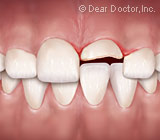
Teeth that are fractured or dislodged are a serious condition that requires immediate, comprehensive treatment. The majority of dental injuries, however, are less severe: most often, they involve chipped teeth. If chips occur in the upper front teeth — as some 80% of dental injuries do — even small flaws can have a big affect on the appearance. And, especially in the teenage years, appearance can mean everything.

In many cases, small chips in the teeth can be repaired effectively using a procedure called “bonding.” In this treatment, we use a tooth-colored material made by mixing a plastic matrix and a glass-like filler, which provides adequate strength and aesthetic qualities similar to the natural teeth. In fact, this composite material can be matched to an individual's tooth color so accurately that it's hard to notice any difference.

Composite resins can be successfully bonded to most healthy teeth — and they offer some advantages over other restoration methods, particularly for children and teenagers. The bonding procedure avoids making tiny “undercuts” in the natural substance of the tooth, while metal fillings need to “lock in” to the tooth's structure. This means that bondings generally require less tooth preparation, which usually makes bonding a quick and relatively easy method of restoration.

It's true that, over time, some bonded restorations may not stand up to the tremendous biting forces of the jaw as well as porcelain restorations — but in young people whose permanent teeth have large pulp (nerve) chambers, the removal of too much tooth structure could compromise the long-term health of the tooth. Later on, we can look at performing a different type of restoration.

If you have questions about cosmetic bonding or sports-related dental injuries, please contact Dr. Cindy Sumarauw at 801-281-3500 to schedule an appointment for a consultation. You can learn more in the Dear Doctor magazine articles “Repairing Chipped Teeth” and “An Introduction to Sports Injuries & Dentistry.”

Monday, January 7, 2013

Smile Makeovers — Planning For Your Wedding

Wedding day smile.Of major importance in all wedding day plans is to ensure that you have your special day captured on film. And it is that fact that influences most brides and grooms to take a long and hard look in the mirror to observe their smiles. Not only do wedding dates motivate many brides and grooms to address concerns regarding their smile, it also serves as the perfect time for their parents to pursue their smile makeover dreams so that they too feel good about themselves in your wedding photos.

A proper smile makeover should have a two-fold design plan that ensures you obtain optimal functionality and oral health while creating the cosmetic look you want. Starting with the basics, a thorough dental cleaning is the least expensive way to remove stains and freshen both your smile and breath. We will also use this consultation to learn about your concerns, goals, expectations, and wedding day timeline to create the action plan for future treatments in reaching your smile makeover goals. You may also want to discuss whitening your teeth during your appointment, as whitening teeth is an effective way to brighten your smile a few shades in as few as 1 to 2 appointments plus whitening while at home.

If your smile makeover is a bit more challenging, relax. There are a wide variety of tools and techniques available that include bonding, porcelain veneers, crowns, bridges, and dental implants for restoring your smile. Or we may work closely with a specialist such as an orthodontist to straighten your teeth or a periodontist for periodontal plastic surgery that can alter your gum tissues and their relationship with your teeth. The most important tip to remember is to schedule your first dental appointment soon after you become engaged so that you have plenty of time prior to the big day to attain your picture perfect wedding day smile.

Want to learn more?

Contact Dr. Cindy Sumarauw at 801-281-3500 to schedule an appointment to discuss your smile makeover questions. You can also learn more by reading the Dear Doctor article, “Planning Your Wedding Day Smile.”