
Thursday, October 30, 2014

Porcelain Veneers Could Change Your Appearance for the Better

veneers.We now have an amazing repertoire in dentistry to restore the look and function of damaged or missing teeth. From tooth-colored crowns to life-like dental implants, we can turn an embarrassing smile into one you’re confident to show the world.

But what if your teeth are visually unappealing but structurally sound? Perhaps they’re slightly irregular or discolored — do you still need the “heavy artillery” in our arsenal of restoration options?

Not at all — dental veneers that provide amazing aesthetic results with minimal tooth preparation may be an appropriate restoration choice for you. As the name implies, veneers are a thin layer of dental material (usually porcelain) that’s permanently bonded to the outside of a tooth. Veneers can be shaped to resemble natural teeth — especially effective for changing the appearance of small or slightly misshapen teeth — and can be customized to match an individual patient’s tooth color.

Veneered teeth require very little preparation compared to other restorations; still, most veneer applications do require some permanent enamel removal so that the applied veneers appear natural. In recent years, however, changes in veneer design and materials have made it possible for some patients to receive veneers without some tooth prep.

If taken care of properly, veneers can last anywhere from seven to twenty years (in some cases, more). While their material composition and the bonding process can withstand normal biting forces, wearers need to keep in mind porcelain is a form of glass — excessive twisting or pressures from excessive grinding habits could cause them to shatter.

And because veneers are made of an inert, non-living material, they can’t adapt to any changes that may occur biologically to your teeth and gums and may need to be updated at some point in the future. The good news is that a loosened veneer can often be repaired.

If you’d like to know if you’re a good candidate for this cost-effective, minimally invasive option, visit us for an examination. Balancing all the factors, porcelain veneers just may be your answer to achieving a better smile.

If you would like more information on porcelain veneers, please contact Dr. Cindy Sumarauw at 801-281-3500 to schedule an appointment for a consultation. You can also learn more about this topic by reading the Dear Doctor magazine article “Porcelain Veneers.”


Monday, October 20, 2014

Five Things to Know About Bleeding Gums

bleeding gums.Did you ever brush your teeth and find that your gums were bleeding slightly? This unwelcome discovery is more common than you might think — and it might have something to tell you about your oral health. Here are five things you should know about bleeding gums.

  • As much as 90% of the population occasionally experiences bleeding gums. It happens most often while brushing — and it’s often a sign of trouble, indicating that your gums are inflamed and/or you aren’t brushing or flossing optimally.
  • Bleeding gums can be an early warning sign of gum disease. In its earliest stages, this malady is called gingivitis, and it’s quite common. About 10 to 15 percent of people with gingivitis go on to develop a more serious form of gum disease, called periodontitis. If left untreated, it can lead to gum recession, bone loss, and eventually tooth loss.
  • A professional exam is the best way to tell if you have gum disease. Your dentist or hygienist may use a small hand-held instrument called a periodontal probe to check the spaces between your teeth and gums. When gum tissue becomes detached from the teeth, and when it bleeds while being probed, gum disease is suspected.
  • Other symptoms can confirm the presence of gum disease. These include the presence of pus and the formation of deep “pockets” under the gums, where gum tissues have separated from teeth. The pockets may harbor harmful bacteria, and need to be treated before they cause more damage.
  • Several factors may influence the health of your gums. How effectively you brush and floss has a major impact on the health of your gums. But other factors are important too: For instance, women who are pregnant or taking birth control pills sometimes have bleeding gums due to higher hormone levels. Diabetics and people with compromised immune systems often tend to have worse problems with periodontal disease. Certain drugs, like aspirin and Coumadin, may cause increased bleeding; smoking, by contrast, can mask the presence of gum disease by restricting blood flow.

It’s never “normal” to have bleeding gums — so if you notice this problem, be sure to have an examination as soon as you can. If you have questions about bleeding gums or periodontal disease, please contact Dr. Cindy Sumarauw at 801-281-3500 to schedule an appointment for a consultation. You can read more in the Dear Doctor magazine article “Assessing Risk For Gum Disease.”

Tuesday, September 30, 2014

Retainers Help Preserve Your New Smile After Braces

retainer.Your braces have finally been removed and you’ve unveiled your new smile to the world. You’re finished with orthodontics — right?

Not quite. If you want to “retain” your new smile you’ll need to wear a retainer appliance: depending on your age and which teeth were moved, that could be for several months or even indefinitely.

Retainers are necessary because of how teeth naturally move within the mouth. Although your teeth may seem rigidly set in bone, they’re actually held in place by an elastic tissue called the periodontal ligament. This tissue is quite dynamic in response to biting forces or even normal tooth wear. When forces are applied to a tooth, it’s the ligament that transmits pressure against the teeth to gradually move them to a more accommodating position. In response, the bone resorbs (dissolves) on the side of the tooth moving toward the new position while laying down new growth on the other side. This bone growth will help anchor the tooth in the new position.

Braces use this natural process to gradually move teeth; both the ligament and bone will reform as needed. But this reforming process takes time. Furthermore, there’s a natural balance between the teeth, the tongue and the lips and cheeks. Although the new position created by orthodontics may be more aesthetically pleasing, it may disrupt the natural balance of these surrounding muscles. The influence of habits like clenching or grinding of your teeth may also disturb the new tooth position. The natural tendency is to revert back to the original tooth position.

We use retainers to prevent this reversal. Nearly all orthodontic patients will initially wear them all the time, and for younger patients this may be reduced to wear only during sleep time. Total wear time usually lasts a minimum of eighteen months, until the bone and ligament have fully reformed.

For older patients, though, retainer wear may need to continue indefinitely to prevent “relapse.” In these long-term cases another option to a removable retainer is to permanently bond thin retainer wires to the inside surfaces of the front teeth. The wires can remain in place for several years and are much less noticeable than a removable retainer.

While retainers are often considered inconvenient, they’re absolutely necessary for preserving the results of orthodontic treatment. In the end they’ll help you keep the form and function of your new smile.

If you would like more information on orthodontic retainers, please contact Dr. Cindy Sumarauw at 801-281-3500 to schedule an appointment for a consultation. You can also learn more about this topic by reading the Dear Doctor magazine article “Why Orthodontic Retainers?”

Wednesday, September 17, 2014

Curt Schilling Blames Smokeless Tobacco for His Oral Cancer

schilling.For years, even as tobacco use began to decline and disappear in most settings, professional baseball seemed one of the few exceptions. Now, the tide is finally turning. Recently, the legendary right-hand pitcher Curt Schilling revealed that he had been treated for oral cancer — and said that his chewing tobacco habit was to blame. “I’ll go to my grave believing that was why I got [cancer],” Schilling told the Boston Globe.

Schilling isn’t the only former player whose oral cancer is blamed on smokeless tobacco. Tony Gwynn, Hall of Famer and beloved coach, recently passed away from oral cancer at the age of 54. His death led to players pledging to give up the habit. But many still use “dip” or “snuff,” thinking perhaps it’s not so bad after all.

In fact, nothing could be further from the truth. With nicotine as its active ingredient, chewing tobacco can be just as addictive as cigarettes. Not only is nicotine addictive, it also increases heart rate and blood pressure, constricts the arteries, and affects the body in other ways. In addition to nicotine, chewing tobacco contains about 30 other chemicals known to cause cancer.

Tobacco use of any kind is a major risk factor for oral cancer. While it isn’t as well-known as some other types of cancer, oral cancer can be just as deadly. About 43,000 people in the U.S. are diagnosed with it each year — and the 5-year survival rate is just 57%. One reason for the relatively low survival rate is that oral cancer isn’t usually detected until it has reached a later stage, when it’s much harder to treat.

What can you do to reduce your risk for oral cancer? Clearly, you should stop using tobacco products of any kind. Moderating your intake of alcohol, and eating more plant foods and less red meat can also have an impact. And don’t forget to have regular dental checkups: cancer’s warning signs can often be recognized in an oral examination — and early detection can boost survival rates to 80-90 percent.

How does Schilling feel about chewing tobacco now? “I lost my sense of smell, my taste buds for the most part. I had gum issues, they bled, all this other stuff,” he told the Globe. “I wish I could go back and never have dipped. Not once.”

If you have questions about oral cancer or cancer prevention, please contact Dr. Cindy Sumarauw at 801-281-3500 to schedule an appointment for a consultation. You can learn more in the Dear Doctor magazine articles “Chewing Tobacco” and “Diet and Prevention of Oral Cancer.”

Tuesday, August 26, 2014

Dental Hygienist - Your Partner in Preventing Disease and Maintaining Oral Health

dental hygienist.Keeping up your dental hygiene with daily brushing and flossing is essential to preventing disease and maintaining good oral health. But that doesn’t mean it’s all on your shoulders — the fact is, you have a strong partner in your dental hygienist. This valuable member of our staff provides a number of different functions that add a boost to your hygiene habits.
Perhaps the most important of those functions is semi-annual teeth cleanings. While daily brushing and flossing removes most of the bacterial plaque that causes dental disease and decay, harder deposits (tartar) will still form over time, especially in places your brush or floss can’t reach. To remove it requires advanced skills and specially designed hand instruments or ultrasonic equipment. In the case of advancing gum disease, your hygienist may also assist with a procedure known as root planing to reach plaque and tartar adhering to tooth root surfaces below the gum line.

Dental hygienists are also on the lookout for abnormalities that may be a sign of disease. During teeth-cleaning sessions, your hygienist looks for gum inflammation or bleeding that may indicate the presence of periodontal gum disease, a progressive condition that, left untreated, could lead to tooth loss. We will be able to assess the extent of the disease by gently probing and measuring any detachment of the gum tissue that has formed voids known as pockets. They also look for signs of oral cancer — bumps, sores or areas of swelling or tenderness.

There’s one other function your hygienist provides to enhance your oral health — educating and training you on dental care. They can provide you helpful information on risk factors for tooth decay or other dental diseases, along with helpful ways to reduce that risk. They can also help you improve your brushing and flossing techniques by demonstrating proper form.

Cleaning, monitoring and educating — these different “hats” your hygienist wears form a beneficial part of your overall dental care. Working together, you’ll be able to keep your teeth and gums in good form and function.

If you would like more information on the benefits of a dental hygienist, please contact Dr. Cindy Sumarauw at 801-281-3500 to schedule an appointment for a consultation. You can also learn more about this topic by reading the Dear Doctor magazine article “Dental Hygiene Visit.”

Friday, August 15, 2014

Major Benefits for Tooth Replacement With Dental Implants

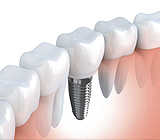
implants.Perhaps you’ve heard a lot about dental implants, an increasingly popular tooth replacement system. Although they can be expensive (depending on the exact application) they have a number of important benefits that add value to your investment.

Here are four of those benefits that make dental implants one of the best tooth replacement options available:

Life-like Appearance. Like an automobile, an implant’s “engine” — the titanium post inserted into the jawbone — is covered by a stylish “body” — the visible crown, custom-made to look just like the natural tooth. Composed of porcelain ceramic or a similar translucent material, the implant crown is the key to not only restoring natural function in the mouth but also rejuvenating your smile.

Long-term Durability. Implants have been in use for over three decades (over 3 million placed since their introduction) and have built an impressive track record for durability. If properly cared for, it’s possible for dental implants to last for many years or even a lifetime. Compared with other restorations that may not last as long and lead to additional dental cost, the implant’s “return on investment” can be quite high.

Contribution to Bone Health. Most implants are made of surgical titanium, which has a strong affinity with bone. In time, bone cells will grow and fuse with the titanium. The result is not only a solid anchoring of the implant into the jaw, but also the preservation and possible re-growth of bone mass where it may have been lost.

Versatility. Although implants are often used as a single tooth replacement, they’re increasingly used in multiple-tooth replacements. A few strategically placed implants can permanently support a bridge (two or more teeth linked together), an arch (an entire set of upper or lower teeth), or as a foundational support for a removable denture, particularly the lower arch.

If you’ve experienced tooth loss, a preliminary dental examination will determine if you’re a potential candidate for dental implant replacement. If so, dental implants could be a way for you to not only restore lost function but also regain your smile.

If you would like more information on dental implants, please contact Dr. Cindy Sumarauw at 801-281-3500 to schedule an appointment for a consultation. You can also learn more about this topic by reading the Dear Doctor magazine article “Dental Implants 101.”

Thursday, July 24, 2014

New Study Shows Custom-Made Mouthguards Cut Concussion Injuries in Half

mouthguard.Concussion in athletes is a topic that’s getting lots of attention recently — not only in professional leagues, but also at the level of high school, collegiate and amateur sports. Helmets are being increasingly used in both contact and non-contact sports, like skiing and biking. But when you’re looking for quality gear that gives you additional protection against head and facial injuries, do you think of getting it at the dental office?

According to some new research, you should. A study published in the journal of the Academy of General Dentistry shows that a custom-made mouthguard, obtained at a dentist’s office, is more than twice as effective against mild traumatic brain injures (MTBI) and concussions than the over-the-counter (OTC) mouthguards you can get at a sporting-goods store.

The randomized study followed six different high school football teams, with a total of 412 players. Half were assigned to wear custom-made mouthguards, while the other half used OTC types; all wore the same type of helmets. When the season ended, a total of 24 MBTI/concussion injuries were reported, for an overall rate of 5.8 percent.

But the study revealed that not all mouthguards are created equal: The incidence of concussion for players wearing OTC mouthguards was 8.3 percent, while the group with dentist-provided custom mouthguards had an incidence rate of just 3.6 percent — less than half the rate of the OTC group!

That’s a big difference — and there’s one more thing to consider: While they can give you additional protection against concussion, mouthguards are primarily designed to protect your teeth from serious injury. It is well established that athletes who wear mouthguards significantly reduce the risk of dental and facial injury. That’s why they are recommended by the American Dental Association, and why so many sports leagues and associations require their use at all levels of play.

A custom fabricated mouthguard, made from a model of your own teeth, fits you better than any generic type can; it’s also a better investment. The mouthguards we provide last much longer than the “boil-and-bite” or self-molded ones available in sporting-goods stores and big-box retailers. And if it prevents a single serious injury, a custom-made mouthguard can pay for itself many times over — not only in terms of medical bills, but also in time lost from school or work… and on the field, the trail or the slopes.

If you have questions about custom-made athletic mouthguards, please contact Dr. Cindy Sumarauw at 801-281-3500 to schedule an appointment for a consultation. You can learn more by reading the Dear Doctor magazine articles “Athletic Mouthguards” and “An Introduction to Sports Injuries & Dentistry.”