Tuesday, September 22, 2015

Look at the Long-Term Costs When Considering Dental Implants

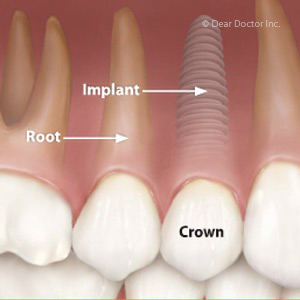
implant.You’ve probably heard a lot of great things about dental implants as a replacement for missing teeth. But there’s one aspect about implants that may cause you hesitation about choosing them: the cost. If you have multiple teeth to be replaced, the expense of implants may seem even further beyond your means.

But before you decide against what’s widely considered the premier tooth replacement option, it would be beneficial for you to look at their cost from a long-term perspective. You may find implants are actually a cost-effective investment in both your oral health and your smile.

So, what sets the dental implant apart from other options? One of its most important attributes is its life-like appearance. Not only does the visible crown resemble the color, shape and texture of natural teeth, the implant’s placement can so precisely mimic the appearance of natural teeth emerging from the gums, it’s indistinguishable from the real thing.

They’re not just attractive, but also durable. This is due in large part to titanium, the most common metal used in implants, which has the unique quality of being osseophilic, or “bone-loving.” Bone cells naturally attract to titanium and over time will grow and adhere to the implant in a process known as osseointegration. As a result, the implant’s attachment in the jaw becomes strong and secure.

This durability gives implants a greater longevity on average than most other replacement options. If you thus compare the total costs for an implant (including maintenance) over its projected life with the costs of other options like dentures or fixed bridges, you’ll find implants may actually cost less over time.

That may sound affordable for one or two missing teeth — but what about several? Replacing multiple teeth individually with implants can be quite high; but implants are also versatile — just a few strategically placed implants can support a fixed bridge or overdenture. This “hybrid” solution combines the affordability of these other options with the stability of implants.

Before weighing your options, you should first undergo a complete dental examination to see if you’re a candidate for implants. From there we can help you decide whether implants are the right investment for your health and your smile.

If you would like more information on dental implants, please contact Dr. Cindy Sumarauw at 801-281-3500 to schedule an appointment for a consultation. You can also learn more about this topic by reading the Dear Doctor magazine article “Dental Implants 101.”

Tuesday, September 8, 2015

Don't Allow Your Age to Stop You from a New Smile with Orthodontics

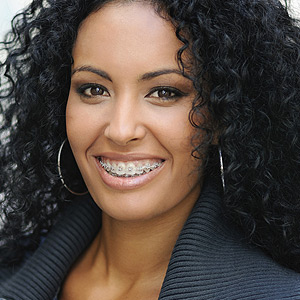
adult braces.Think you’re too old to have your teeth straightened? In reality, healthy teeth can be moved at any age to better positions. For the many adults who have some form of malocclusion (bad bite), orthodontics is still a viable option even in later years.

As important as it is to self-image and confidence, treating misaligned teeth can benefit you more than just improving your smile. Misaligned teeth may be harder to keep clean, setting up a mouth environment advantageous to the development of tooth decay or periodontal (gum) disease, the risks of both rising with age. And normally aligned teeth are easier to chew with than those misaligned.

Age isn’t the determining factor for whether you’re a good candidate for orthodontics — but your dental health is. Gum disease in particular can cause supporting bone loss, which can complicate orthodontic treatment. It’s important then that we first perform a complete oral examination and attempt to treat problems such as decay or gum disease first before attempting tooth movement.

What type of orthodontic treatment you’ll need will depend on the type of malocclusion you have and its relationship to the way your jaws fit together. Because your adult jaws have fully developed you may need orthognathic (“jaw straightening”) surgery to address certain advanced forms of malocclusion. If your bite problems aren’t that severe (the majority of situations) they can be treated with braces or, an increasingly popular alternative, clear aligners. These customized clear plastic trays are nearly invisible compared to metal braces and are effective for most patients.

Following the completion of tooth movement and other bite procedures, you will most likely need to wear a retainer to help prevent the teeth from reverting to their older positions. You may need to wear the retainer for a longer period than a younger patient, or perhaps indefinitely. Even with this mild inconvenience, though, you’ll still experience the positive effects of healthier and better functioning teeth and a great new smile.

If you would like more information on orthodontic treatment, please contact Dr. Cindy Sumarauw at 801-281-3500 to schedule an appointment for a consultation. You can also learn more about this topic by reading the Dear Doctor magazine article “Orthodontics for the Older Adult.”

Monday, August 31, 2015

Gluten Sensitivity can Lead to Dental Problems

gluten.There’s been a growing awareness about the effects of gluten, a protein found in grains like wheat, rye and sometimes oats, on certain people. An estimated 1 in 133 Americans have Celiac Disease (CD), a gluten-related disorder that causes the body’s immune system to work against itself. And if you have CD, you could eventually face dental problems like enamel pitting and erosion.

When a person with CD consumes gluten, their immune system mistakenly identifies the protein as malicious and attacks it. The attack occurs in the membranes that line the digestive system, which in the process destroys cilia, tiny hair-like structures that aid in food absorption. This disrupts the body’s normal absorption of nutrients, which can lead to a number of systemic conditions including intestinal cancer.

Because of the lack of nutrients, your teeth’s enamel may develop defects. You may begin to see dull spots or pitting, or chalky grooves in its normally shiny surface: this is a sign you’ve lost surface enamel crystals (decalcification). You may also be more susceptible to outbreaks of aphthous ulcers (canker sores).

Because symptoms can be misdiagnosed or go unnoticed, it may be years before you know you have CD. You can, however, get a definitive diagnosis through a blood test for gluten antibodies, which is then confirmed with a biopsy of a tissue specimen from the intestine.

While there’s ongoing research for CD-related medication, there’s currently only one recognized treatment for it — remove gluten from your diet. This is much harder than it sounds, and requires knowing what you can and can’t eat, along with strict monitoring of food package labeling. Thankfully, the world is becoming better educated in this respect as more food manufacturers are clearly labeling products containing gluten and restaurants are providing gluten-free menu options.

Once you have dietary controls in place, your dental issues can be treated as any other person, with one exception: none of the products used in treatment like polishing paste or fluoride gels should contain gluten, and must be verified before using.

CD is a serious condition that could even become life-threatening. Knowing you or someone in your family has it will help you protect both your overall health and your teeth.

If you would like more information on the gluten’s effect on dental health, please contact Dr. Cindy Sumarauw at 801-281-3500 to schedule an appointment for a consultation. You can also learn more about this topic by reading the Dear Doctor magazine article “Gluten & Dental Problems.”

Friday, August 14, 2015

3 Tips for Helping Your Child Feel More Comfortable Going to the Dentist

kid at dentist.There’s really no secret to keeping your child’s teeth healthy — good, daily hygiene habits, regular dental visits and early treatment for emerging problems. It’s a lot easier for those things to happen if your child feels comfortable with dental care and visiting the dentist. Sadly, that’s not always the case: many children develop an unhealthy fear of the dentist because the initial relationship may have been mishandled.
Here, then, are 3 tips that will help you foster a healthy relationship between your child and their dentist.

Visit the dentist before their first birthday. From a health standpoint, dental visits should begin soon after your child’s first teeth emerge (erupt) in the mouth. Visiting the dentist by their first birthday also improves the chances they’ll develop a sufficient level of comfort with the visits, more so than if you waited a year or two longer.

Choose your dentist with your child’s sense of security and comfort in mind. When you’re looking for a dentist to care for your child, think of it as looking for a “new member of the family.” It’s important to find an office environment that’s kid-friendly and staff members that work well with children. Some dentists specialize in pediatric dentistry and many general dentists have additional training in working with children. The key is a dental team that has a good, trust-building rapport with children.

Set an example, both in the home and at the dentist. Children learn quite a bit watching what their caregivers say and how they react in potentially stressful situations. If dental care is important to you personally, it’s more likely to become important to your child. And when you visit the dentist with your child, be sure to project calm and a sense that it’s routine — if you display tenseness or nervousness your child may take that as a sign that visiting the dentist is something to fear.

You want your child to learn that the dentist is their friend who’s there to help them. That lesson should begin early with the right dental team — and by making dental care a priority in your own life.

If you would like more information on dental care for your child, please contact Dr. Cindy Sumarauw at 801-281-3500 to schedule an appointment for a consultation. You can also learn more about this topic by reading the Dear Doctor magazine article “Taking the Stress out of Dentistry for Kids.”

Wednesday, May 20, 2015

The Many Advantages of Dental Implants

dental implant.Dental implants have become the standard for long-term tooth replacement. From mechanics to movie stars, people from all walks of life have discovered the advantages of replacing a missing tooth with an implant. Obviously, restoring your smile is a definite advantage, but an implant can also help to maintain the health of your jawbone and adjacent teeth.

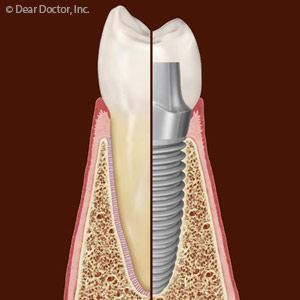
The implant is a small, screw-like titanium post that is placed into your jawbone to function as the root part of the tooth. The living bone tissue will actually attach to the titanium post, fusing them together. This will not only provide a sturdy anchor for a natural-looking crown, but will provide stability for bridgework or dentures. You will then be able to smile, chew and talk as if all of your teeth are natural. The procedure will also help to stabilize the bone, reducing long-term bone loss that occurs when a missing tooth is not replaced.

At this point, if you are thinking that there must be a lot of pain involved, I have good news for you. There is very little pain involved after the procedure is completed and no pain at all during the procedure. Typically, it is a routine surgery that takes place in a dentist’s office under local anesthesia where the immediate area is numbed. If there is any apprehension at all about the procedure, we will offer alternative anesthesia or sedation options during the planning process.

To determine who will be a good candidate for the implant procedure, a plan must be in place to assure the success of the implant. Part of the plan includes:

  • Reviewing your past medical and dental history. We must know your complete past and present medical history and medication use, since good health is essential. There are certain conditions and diseases that can affect the healing of an implant.
  • Performing a comprehensive dental examination. An evaluation of your dental problems and needs will determine if implants are in your best interests. An assessment of the health and mass of the jawbone as well as the number and location of the implant(s) that are needed to restore your bite and smile back to health will also be determined.

When the implant procedure has been successfully completed, there is one more step. As with your natural teeth, preventive maintenance is crucial for long-term success. A daily routine of brushing and flossing along with regular professional dental cleanings and checkups will help ensure continued gum health and proper functioning of your implants.

If you are wondering whether dental implants are right for you, contact Dr. Cindy Sumarauw at 801-281-3500 to schedule an appointment for a consultation. You can also learn more about dental implants by reading the Dear Doctor magazine articles “Dental Implants” and “Dental Implant Surgery.”

Thursday, May 7, 2015

A Smile Makeover is a Transforming Experience

smile makeover.The term “makeover” is a powerful word in today’s society. It’s used for a variety of things — hair, body, lawn — that need more than a different style, a little toning or some new shrubs. A makeover is a transformation, replacing the dissatisfying status quo with something new and dynamic.

Your smile and its various components — teeth, gums, jaw structure and facial features — might also be a candidate for a makeover. This involves more than just a few modifications. It’s the answer to a smile we avoid showing in photos, cover with our hand when we’re speaking or laughing, or makes us feel older than we really are. In other words, it’s a comprehensive change to a smile that inhibits us from fully expressing ourselves in our friend, family or career relationships.

Of course, for any makeover to succeed, it must follow a plan. A smile transformation is no different. The process begins with what we call a “smile analysis”: a comprehensive examination that determines the exact condition of your entire mouth. This enables us to identify problems and defects, understand how they interact with your other facial features, and then recommend a treatment plan that effectively addresses these issues.

The plan isn’t complete, though, without your input. You may want a complete renovation — to restore missing teeth or change their shape, color and brilliance. On the other hand, you may be more comfortable with a few subtle changes, perhaps even keeping slight imperfections that you see as part of the real “you.” Whichever path you take, the end result is a smile that makes you happy, and proud to show to others.

The various techniques and materials available through cosmetic or restorative dentistry can turn any disappointing smile into a beautiful one. Your journey to that newer, brighter smile begins with your next dental visit.

If you would like more information on smile makeovers through restorative or cosmetic dentistry, please contact Dr. Cindy Sumarauw at 801-281-3500 to schedule an appointment for a consultation. You can also learn more about this topic by reading the Dear Doctor magazine article “The Impact of a Smile Makeover.”

Tuesday, April 21, 2015

Mouthguards Reduce Risk of Concussion as well as Dental Injuries

mouthguards.Since boxers first began using them a century ago, athletic mouthguards are now standard safety equipment for most contact sports. Without them, dental injuries would skyrocket.

But a recent study in the peer-reviewed journal, General Dentistry, indicates there’s another important reason to wear a mouthguard for contact sports or exercise: you may be able to significantly reduce your risk for a mild traumatic brain injury (MTBI), better known as a concussion. It’s believed the mouthguard absorbs some of the force generated during contact, resulting in less pressure to the brain. That reduction is even more significant if your mouth-guard has been custom-made by a dentist.

That last finding is important, because not all mouthguards on the market are equal. There are three basic categories of mouthguards — stock, “boil and bite,” and custom. Stock mouthguards come in limited sizes; they’re relatively inexpensive, but they provide the least level of protection. “Boil and bite” can be customized after purchase to the wearer’s bite, but they don’t always provide complete coverage of back teeth. Custom mouthguards are designed and fashioned by a dentist; they’re relatively expensive (running in the hundreds of dollars), but there’s ample evidence they provide the highest level of protection from mouth injuries.

The General Dentistry study also corroborates custom mouthguards’ effectiveness in preventing concussions. The study followed approximately 400 football players from six different high school teams. While all the players wore the same type of helmet, half of them wore custom-made mouthguards and the other half wore stock guards. 8.3% of the athletes wearing stock guards experienced a concussion injury; by contrast only 3.6% of those with custom guards sustained an injury — greater than half fewer occurrences.

The study also highlights the need not to rely solely on helmets or other protective headgear for concussion prevention. It’s important to include mouthguards along with other athletic protective gear to lower injury risk as much as possible.

So when considering how you can provide the optimum injury protection for you or your child, be sure to include an athletic mouthguard, preferably one that’s custom-made. We’ll be happy to advise you further on what you need to know to prevent traumatic dental injuries, as well as concussions.

If you would like more information on custom-fit mouthguards, please contact Dr. Cindy Sumarauw at 801-281-3500 to schedule an appointment for a consultation. You can also learn more about this topic by reading the Dear Doctor magazine article “Mouthguards.”