
Friday, December 21, 2012

Teeth Can Suffer From Holiday Stress, Too!

holiday stress.Once again, it's that time of year when the holiday spirit is in the air: the time when you start hearing those old songs and seeing those pretty lights (not to mention the shopping crowds and the bad weather.) But for lots of us, along with all the good cheer comes a measure of holiday-induced stress. In all the hustle and bustle of the season, could your teeth be suffering from holiday stress too?

We're not just talking about what may happen when you bite down on an uncooked kernel in a popcorn ball, or use your mouth to do what you should be doing with a nutcracker — although that certainly does occur. But for many people, the holidays are a time when we're eating lots of sugary snacks and rushing around without really taking care of ourselves. In fact, people in recent surveys have said they expect to gain an average of about five pounds during the season (although their actual weight gain is probably less.)

Still, that's a lot of extra calories — and many come from the sugar in holiday treats. Aside from the added weight (which may be hard to take off), this can create a host of dental problems, including one very common — and preventable one — tooth decay. Here are a few friendly reminders about how you can prevent your teeth from “stressing out.”

If you're going to indulge in some sweet treats, wait until after a meal — but resist between-meal snacks, and don't feed your sweet tooth right before bed. Why? It's all because of your saliva! Saliva is the body's natural way of neutralizing acids in the mouth that promote tooth decay — but it takes about an hour to work. If you're constantly putting sugars in your mouth, your saliva has no time to do its job.

What if you brush your teeth right afterward? You might think this would be effective, but research shows otherwise. Sugar creates acid, and acid softens tooth enamel, which helps protect your teeth from decay. After acid attack, enamel can take 30-60 minutes to re-harden. If you frequently brush while the enamel is soft (more than twice per day), you might actually begin brushing enamel away. So too-frequent brushing may do more harm than good.

What's the good news? Fluoride toothpaste, used properly, is effective at preventing cavities. Calcium, which is often added to beverages as a nutritional supplement, may also help protect tooth enamel. And — perhaps surprisingly — eating cheese may also be beneficial, as it too can help neutralize acids in the mouth.

So pass on the candy canes, enjoy the cheese plate — and have a happy holiday!

If you have questions about tooth decay or oral hygiene, contact Dr. Cindy Sumarauw at 801-281-3500 to schedule an appointment for a consultation. You can learn more in the Dear Doctor magazine articles “Tooth Decay” and “Oral Hygiene Behavior.”


Wednesday, December 12, 2012

Dreaming of White Teeth for Christmas?

smile.The holidays are traditionally a time when friends and family from near and far can get together and make merry. In this joyful season, many folks look forward to re-connecting with old friends… and maybe making new ones. But if you've been hesitant to show your holiday smile because your teeth are less than pearly white — then why not stop fretting: Did you know that your teeth could be dramatically brighter after just one visit to the dental office?
With in-office tooth whitening, it's not to late get dazzling white teeth in time for the holidays! Our professionally-administered whitening procedure is far different from over-the-counter (OTC) or even take-home treatments. These treatments can be effective — but they typically take weeks to produce noticeable results. Using an in-office treatment, your teeth can be lightened up to ten shades in about an hour!

Before you begin any whitening system, however, it's important to find out what's causing your teeth to look dull in the first place. Otherwise, whitening teeth is like papering over a hole in the wall: it hides the defect, but doesn't fix the problem. We start by performing a through exam to check for hidden trouble, such as a root-canal problem or another issue. After the exam, we can begin the whitening treatment.

The reason our in-office procedure works so well is the high concentration of the whitening gel. When it's done under professional supervision, whitening gel may contain 35-45% of the active ingredient, as compared to about 6-10% in take-home or OTC products. Of course, during the treatment, we constantly monitor the whitener's action, and ensure that the lips, gums, and other mouth parts are protected from exposure to chemicals.

Numerous studies have shown that tooth whitening is generally a safe, conservative, and effective procedure. When it's carried out under the supervision of trained professionals, you have the opportunity to get the most dramatic results in the shortest time. So if you've been dreaming of white teeth for Christmas — why not give us a call?

If you have questions about tooth whitening, please contact Dr. Cindy Sumarauw at 801-281-3500 to schedule an appointment for a consultation. You can learn more in the Dear Doctor magazine articles “Teeth Whitening” and “Important Teeth Whitening Questions Answered.”

Thursday, November 22, 2012

The Value of Mouthguards

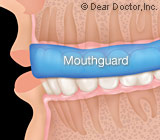
Mouthguards.Participating in athletic activities offers numerous well-documented health benefits — not to mention instilling the intangible values of discipline, teamwork and goal-setting. Of course, in nearly every sport, the possibility of injury exists as well. But don't let that stop you or someone you love from playing! Instead, you can learn about the potential hazards of dental injury, and take some practical steps to minimize the risk.

It should come as no surprise that injury to the mouth is an ever-present possibility in so-called “collision” sports like football and ice hockey. But did you know that the greatest number of dental injuries result from the games of baseball and basketball, which are often played informally? Even non-contact sports like skiing, bicycling and skateboarding carry a real risk of injury.

Who suffers dental injury? Men are slightly more likely than women — but only by a small percentage. Injury peaks in the teenage years, and seems to decrease afterward — but older athletes tend to have more severe problems. In short, most anyone who participates in sports is subject to possible dental injury.

Besides the obvious aesthetic imperfections, a damaged or missing tooth can also result in functional problems with the bite — a potentially serious condition. If a tooth can't be immediately replanted, restoring it can be expensive: The total cost of each tooth replacement is estimated at $10,000-$20,000 over a lifetime. So tooth damage or loss can cause a multitude of troubles.

The American Dental Association (ADA) has recommended that participants in all of the sports mentioned above — as well as two dozen others — should wear a custom-fitted mouthguard. Why? Because when it comes to dental injury, an ounce of prevention really is worth a pound of cure.

Numerous studies have shown that wearing a custom-fitted mouthguard is an effective way to prevent dental injury. According to the Academy of General Dentistry, mouthguards prevent some 200,000 injuries each year. And the ADA says that athletes who don't wear mouthguards are 60 times more likely to sustain harm to the teeth than those who do wear them.

Off-the-shelf mouthguards in a limited range of sizes are available at many sporting-goods stores. But these can't compare to the superior protection and durability offered by a mouthguard that's custom-made just for you. Using an exact model of your teeth, we can individually fabricate a piece of protective gear that fits correctly and feels comfortable in your mouth. A custom mouthguard may be more economical than you think — yet its real payoff comes in preventing dental injury.

If you have questions about mouthguards or sports-related dental injuries, please contact Dr. Cindy Sumarauw at 801-281-3500 to schedule an appointment for a consultation. You can learn more in the Dear Doctor magazine articles “Athletic Mouthguards” and “An Introduction to Sports Injuries & Dentistry.”

Thursday, November 8, 2012

Actress Jennie Garth Shares Tips for Making Oral Health Fun!

Garth.Plenty of parents use little tricks to persuade young ones to eat their vegetables, wash their hands, or get to bed on time. But when actress Jennie Garth wanted to help her kids develop healthy dental habits, she took it a step further, as she explained in a recent interview on Fox News.

“Oh my gosh, there's a froggy in your teeth!” the star of the '90s hit series Beverly Hills 90210 would tell her kids. “I've got to get him out!”

When her children — daughters Luca, Lola, and Fiona — spit out the toothpaste, Garth would surreptitiously slip a small toy frog into the sink and pretend it had come from one of their mouths. This amused the kids so much that they became engaged in the game, and let her brush their teeth for as long as necessary.

Garth's certainly got the right idea. Teaching children to develop good oral hygiene habits as early as possible helps set them up for a lifetime of superior dental health. Parents should establish a brushing routine with their kids starting around age 2, when the mouth is becoming filled with teeth. A soft, child's size toothbrush with a pea-sized dab of fluoride toothpaste and plenty of parental help is good for toddlers. By around age 6, when they've developed more manual dexterity, the kids can start taking over the job themselves.

Here's another tip: It's easy to find out how good a cleaning job your kids are doing on their own teeth. Over-the counter products are available that use a system of color coding to identify the presence of bacterial plaque. With these, you can periodically check whether children are brushing effectively. Another way of checking is less precise, but it works anywhere: Just teach them to run their tongue over their teeth. If the teeth fell nice and smooth, they're probably clean, too. If not... it's time to pull out the frog.

And don't forget about the importance of regular dental checkups — both for your kids and yourself. “Like anything, I think our kids mirror what we do,” says Garth. We couldn't agree more.

If you need more information about helping kids develop good oral hygiene — or if it's time for a checkup — don't hesitate to contact Dr. Cindy Sumarauw at 801-281-3500 to schedule an appointment. You can learn more in the Dear Doctor magazine article “How to Help Your Child Develop the Best Habits for Oral Health.”

Wednesday, October 24, 2012

Dental Implant Maintenance: 5 Facts You Should Know

Dental implants.If you've recently had a dental implant placed, congratulations! You have made a good investment in your smile that should last for a lifetime — if you take proper care of it. This is easy to do with a good oral hygiene routine and regular professional cleanings. Here are some important things to keep in mind about implant care:

  1. Implants can last as long as teeth. A dental implant made of titanium will fuse to the bone surrounding it and function just like a natural tooth. It is a highly successful method of tooth replacement that succeeds more than 95% of the time.
  2. Implants and natural teeth attach to surrounding bone and gums very differently. A natural tooth does not actually fuse to the bone that surrounds it. Instead, it is held in place by a periodontal ligament (“peri” – around; “odont” – tooth) made up of tiny fibers that insert into the bone on one side and into the tooth on the other. Farther up, these collagen fibers attach the tooth to the gum tissue. Implants and the crowns that go on top of them are not anchored to the gum in this way. An understanding of this biology is important for maintaining good periodontal health when implants are present. We will go over this with you so can care for your implants correctly.
  3. Infection is the enemy. Bacterial infection is a concern with both natural teeth and implant-supported teeth. A bacterial biofilm (plaque) builds up daily on implant teeth, just as it does on natural teeth. If it is not regularly cleared away, various oral infections can develop. In the case of natural teeth, this might result in tooth decay, gum disease, and the loss of tooth-supporting bone. Implants can't decay, but they can be threatened by a rapidly progressing infection known as peri-implantits (“peri” – around; implant “itis” – inflammation), which can lead to a well-like or dish-shaped loss of bone around the implant. The implant can become loose as greater amounts of bone is lost.
  4. Good oral hygiene is as important as ever. Daily removal of bacterial biofilm is key to preventing peri-implantitis. You'll want to make sure you brush your teeth twice daily with a soft brush and fluoride toothpaste, and floss gently at least once per day.
  5. Your dental hygienist has an important role to play. Professional cleanings here at our dental office are also still as necessary as ever, if not more so. Dental hygienists have special instruments they use to clean areas around your implant that can't be reached by your brush or floss — without scratching the surfaces of your implant components.

If you would like more information about dental implants, please contact Dr. Cindy Sumarauw at 801-281-3500 to schedule an appointment. You can also read more by reading the Dear Doctor magazine article “Dental Implant Maintenance.”

Wednesday, October 10, 2012

Olivia Newton-John Recalls Daughter's Teething Troubles

Olivia.Singer Olivia Newton-John's daughter Chloe is now a lovely, grown woman, but Olivia recently recounted to Dear Doctor magazine a rather creative method she found to sooth Chloe's teething troubles many years ago.
“When Chloe was a baby and teething I remember using a frozen bagel for her sore gums,” Olivia said. “She loved it!”

Cold is often very soothing to a teething child's gums. In fact, the American Academy of Pediatric Dentistry (AAPD) recommends using a clean, chilled, rubber teething ring, or cold wet washcloth. Chilled pacifiers can also be helpful. Be sure not to freeze teething rings or pacifiers as ice can actually burn sensitive mouth tissues.

Older teethers can sometimes find relieve from cold foods such as popsicles (or bagels!) but make sure your child eats these sugar-containing foods only at mealtimes so as not to promote tooth decay.

If your baby has not yet begun the teething (or tooth-eruption) process, you can expect it to begin usually between six and nine months. It may, however, start as early as three months or as late as twelve months.

Teething symptoms vary among children, as does the length of time it takes for a tooth to make its appearance. But many parents notice the following signs:

  • Irritability
  • Biting and gnawing
  • Gum swelling
  • Chin (facial) rash
  • Disrupted sleeping patterns
  • Ear rubbing
  • Drooling
  • Decreased appetite

These symptoms are usually most bothersome during the week that the tooth is breaking (erupting) through the gums, starting about four days before and lasting about three days after the tooth appears.

Occasionally, teething discomfort can be considerable. If that is the case with your baby, you can give her or him acetaminophen or ibuprofen in the appropriate dose (check with your pharmacist if you're not sure what that is). The medicine should be swallowed — not massaged into the gums, as this can also burn. Numbing agents should not be used for children under 2, except under the advice and supervision of a healthcare professional.

If you would like to learn more about teething or any other child-related oral health issue, please contact Dr. Cindy Sumarauw at 801-281-3500 to schedule an appointment for a consultation. If you would like to read Dear Doctor's entire interview with Olivia Newton-John, please see “Olivia Newton-John.” Dear Doctor also has more on “Teething Troubles.”

Wednesday, September 19, 2012

Five Facts About Crowns

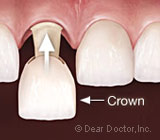
Crown.A crown is a common type of dental restoration that has been available, in different forms, for a long while. When properly done, it may last for decades — and if desired, it can be made to match the shade of the natural teeth so well that it's nearly impossible to tell them apart. Some recent technological innovations may offer patients who need this treatment even more choices. To begin learning about dental crowns, let's start with five facts everyone should know.

Crowns are a type of restoration that can solve many dental problems.

There are many factors that may cause the structure of a tooth to become compromised. It can be weakened by grinding or chipping, gradually removed by repeated dental fillings, or suddenly broken by trauma. Sometimes, a more conservative treatment (like inlays or veneers) may be enough to take care of the problem. When it isn't, the missing tooth structure can be replaced by a crown.

Crowns replicate the form and function of natural teeth.

Because they must fit into your mouth perfectly and match your bite exactly, each crown is an individually-crafted item, made just for you. That means the form of a crown must look just like the tooth it replaces — before it was damaged. And, especially if it's for a front tooth, a crown is often carefully designed to match the particular shade of your teeth. If you are unhappy about the color of your other front teeth, tooth whitening should be done first before your new crown is created to get the best results possible.

Crowns can be made of different materials.

For over a hundred years, crowns have been made of gold. While this extremely long-lasting material remains popular, its use has been declining recently due to aesthetic factors. Two tooth-colored alternatives are all-porcelain and porcelain-fused-to-metal crowns. The exact shade and luster of these substances can be made to closely simulate the natural teeth. Each has advantages and disadvantages in particular situations but we will be happy to make recommendations as to what is in your best interests.

New technologies are changing the way crowns are prepared.

Advances in the field of materials science have led to crowns being fabricated from more durable high-tech substances, like ceramics made of zirconium dioxide. And the availability of small-scale computer-aided design and manufacturing technologies means that in some situations, it's possible for a crown to be fabricated right in the dental office, in minutes. Undoubtedly, these technologies will continue to improve in the future.

Delivering a quality crown is a blend of science and art.

No matter how high-tech the process becomes, producing a fully functional, long lasting and natural-looking crown remains a blend of aesthetics and science, seasoned with a healthy dose of clinical experience. It's also a team effort involving a skillful dentist, a talented dental laboratory technician and a knowledgeable patient — you.

If you would like more information about crowns, please contact Dr. Cindy Sumarauw at 801-281-3500 to schedule an appointment for a consultation. You can also learn more about this topic by reading the Dear Doctor magazine articles “Porcelain Crowns & Veneers,” “Gold or Porcelain Crowns,” and “Creating In-Office Dental Restorations With Computers.”