Monday, December 12, 2016

A Retainer Helps You Keep Your New Smile After Braces

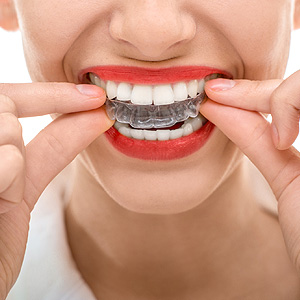
retainer.Moving your teeth to a more functional and attractive alignment is a big undertaking. You can invest months — even years — and a lot of expense to correct a bad bite. But all that effort could be for nothing if your teeth return to their original positions.

The very aspect of dental physiology that makes orthodontics possible can work against you in reverse. Your teeth are not actually rigidly fixed in the bone: they're held in place by an elastic gum tissue known as the periodontal ligament. The ligament lies between the tooth and the bone and attaches to both with tiny fibers.

While this mechanism holds the teeth firmly in place, it also allows the teeth to move in response to changes in the mouth. As we age, for example, and the teeth wear, the ligament allows movement of the teeth to accommodate for the loss of tooth surface that might have been created by the wear.

When we employ braces we're changing the mouth environment by applying pressure to the teeth in a certain direction. The teeth move in response to this pressure. But when the pressure is no longer there after removing the braces or other orthodontic devices, the ligament mechanism may then respond with a kind of “muscle memory” to pull the teeth back to where they were before.

To prevent this, we need to help the teeth maintain their new position, at least until they've become firmly set. We do this with an oral appliance known as a retainer. Just as its name implies it helps the teeth “retain” their new position.

We require most patients to initially wear their retainer around the clock. After a while we can scale back to just a few hours a day, usually at nighttime. Younger patients may only need to wear a retainer for eighteen months or so. Adults, though, may need to wear one for much longer or in some cases permanently to maintain their new bite.

Although having to wear a retainer can be tedious at times, it's a crucial part of your orthodontic treatment. By wearing one you'll have a better chance of permanently keeping your new smile.

If you would like more information on caring for your teeth after braces, please contact Dr. Cindy Sumarauw at 801-281-3500 to schedule an appointment for a consultation. You can also learn more about this topic by reading the Dear Doctor magazine article “The Importance of Orthodontic Retainers.”

Tuesday, November 22, 2016

Vivica's Veneers: the Making of a Hollywood Smile

veneers.What's an actor's most important feature? According to Vivica A. Fox, whose most recent big-screen role was in Independence Day: Resurgence, it's what you see right up front.

"On screen, your smile and your eyes are the most inviting things that bring the audience in" she said. "Especially if you play the hot chick."

But like lots of people, Vivica reached a point where she felt her smile needed a little help in order to look its best. That's when she turned to a popular cosmetic dental treatment.

"I got veneers years ago," Ms. Fox told Dear Doctor magazine in a recent interview, "just because I had some gapping that probably only I noticed."

What exactly are dental veneers? Essentially, they are thin shells of lustrous porcelain that are permanently attached to the front surfaces of the teeth. Tough, lifelike and stain-resistant, they can cover up a number of defects in your smile — including stains, chips, cracks, and even minor spacing irregularities like the ones Vivica had.

Veneers have become the treatment of choice for Hollywood celebs — and lots of regular folks too — for many reasons. Unlike some treatments that can take many months, it takes just a few appointments to have veneers placed on your teeth. Because they are custom made just for you, they allow you to decide how bright you want your smile to be: anywhere from a natural pearly hue to a brilliant "Hollywood white." Best of all, they are easy to maintain, and can last for many years with only routine care.

To place traditional veneers, it's necessary to prepare the tooth by removing a small amount (a millimeter or two) of its enamel surface. This keeps it from feeling too big — but it also means the treatment can't be reversed, so once you get veneers, you'll always have them. In certain situations, "no-prep" or minimal-prep veneers, which require little or no removal of tooth enamel, may be an option for some people.

Veneers aren't the only way to create a better smile: Teeth whitening, crowns or orthodontic work may also be an alternative. But for many, veneers are the preferred option. What does Vivica think of hers?

"I love my veneers!" she declared, noting that they have held up well for over a decade.

For more information about veneers, please contact Dr. Cindy Sumarauw at 801-281-3500 to schedule an appointment for a consultation.

Tuesday, November 8, 2016

Follow These Common Sense Steps When Your Child has a Toothache

tooth pain.A child's toothache is no fun for either the child or the parent. But if you're faced with this situation, don't panic — unless they have a fever or you notice facial swelling, it's unlikely an emergency.

 Instead, take the following steps:

Find out where it hurts and for how long. Tooth pain can stem from a lot of causes, including decay or a localized area of infection called an abscess. See if your child can tell you if it's coming from one particular tooth or from a general area. Although children can't always judge how long they've hurt, try to get a general idea so you'll know if you need to call us sooner rather than later.

Look for problem signs in the mouth. As you look where they say it hurts, see if you can see brown spots or cavities on any teeth — this would indicate tooth decay. Look also at the gums or inner areas of the mouth for sores or swelling. Unless they've had an injury, this could indicate an abscess.

Try to dislodge any food shards between teeth. It's also possible the pain is coming from a piece of hard food like a popcorn kernel wedged between their teeth. Help them gently floss between the teeth to see if you can dislodge any.

Try to ease the pain. Although you may not need to see us immediately, your child's mouth still aches. You can help relieve it temporarily with a child's dose of ibuprofen or acetaminophen. You can also apply an ice pack to the outside cheek for swelling, but don't apply the ice directly to the skin, which can burn it. And don't rub aspirin or other pain relievers on the gums — they're acidic and can irritate soft tissue.

See us for a full examination. It's wise to have any tooth pain checked — the question is often how soon. You should see us the same day or first thing in the morning if the pain has persisted for more than a day or night, pain relievers haven't eased the pain or they have fever or facial swelling. If the pain is short-lived you can usually wait until the next day — but do get it checked out.

If you would like more information on treating your child's toothache, please contact Dr. Cindy Sumarauw at 801-281-3500 to schedule an appointment for a consultation. You can also learn more about this topic by reading the Dear Doctor magazine article “A Child's Toothache.”

Monday, October 24, 2016

Clear Aligners Make it Easier for Teenagers to have Their Teeth Straightened

invisalign.Braces can change a person's life — not just their appearance but their dental health as well. To be honest, though, wearing braces are, well, kind of a drag — especially for teenagers.

Braces can be restrictive and confining; you'll also have to give up certain favorite foods for a while. But more than any of that, they're just plain unattractive. Even being able to choose colors for the brackets and elastic bands can't fully ease a teenager's embarrassment when they smile.

There is, however, an alternative to braces: clear aligners. And they could make orthodontic treatment during this difficult phase of their life much easier to handle.

Clear aligners are a set of clear plastic trays that can be taken in and out of the mouth. Each of the custom-designed trays is slightly smaller from the previous one in the series. After wearing the first tray for a couple of weeks (at least 20 to 22 hours a day), the patient switches to the next tray in the series. They repeat this process until they've worn all the trays. The gradual change from tray to tray moves the teeth to the desired position.

Clear aligners have some distinct advantages over braces, especially for younger patients. They can be removed for cleaning or for a rare special event. They don't limit movement as much as braces. And, they're nearly invisible — other people may not even notice them. And newer aligners are now designed with tiny “power ridges” that increase their movement capabilities. This has made them more useful for teenagers with complicated bite problems and other issues.

There are cases, though, where braces may be the better choice: where you need more control over tooth movement or the patient needs jaw surgery to achieve proper tooth alignment. And their removability could be an issue if the patient won't leave them in their mouth for the necessary time each day.

To find out if clear aligners might be a viable option for your teenager, visit us for a complete orthodontic examination. We can then discuss your best option — clear aligners or braces — to achieve the most desirable outcome for your teenager.

If you would like more information on treating bite problems in teenagers with clear aligners, please contact Dr. Cindy Sumarauw at 801-281-3500 to schedule an appointment for a consultation. You can also learn more about this topic by reading the Dear Doctor magazine article “Clear Aligners for teens.”

Wednesday, October 12, 2016

4 Reasons you may want Your Dentist to Whiten Your Teeth

teeth whitening.With the advent of home whitening kits, you no longer have to go to the dentist to have your teeth whitened. DIY kits are relatively safe and effective, if you follow the directions carefully.

So, you might be thinking: why have a dentist whiten my teeth? Actually, there are good reasons why you might. Here are 4 of them.

We'll make sure your teeth are healthy first. Your teeth may need some attention first, such as treatment for dental disease, before we undertake whitening. We'll also determine why your teeth are stained, which could impact how they're whitened (more about that in a moment).

Our application could take less time and last longer. Bleaching agents in home kits make up less than 10% of volume, much weaker than the applications we use. While it often takes several applications at home to achieve the desired brightness, you may only need one or two sessions with us. Our stronger solution may also extend the “fade time” — when the whitening begins to diminish — than what you may encounter with home whitening.

We can be more precise achieving the right shade. There are different shades of teeth whiteness — what looks good for someone else might not look good for you. We have the training and expertise to achieve a color that's right for you. What's more, we also have techniques and equipment like UV lighting that enables us to color match more precisely than you can with a home kit.

Your DIY kit can't alter some forms of staining. Home kits bleach only the outermost layers of tooth enamel. That won't help, though, if your discoloration originates inside the tooth. This intrinsic staining requires procedures only a dentist can perform to bleach the tooth from the inside out.

Even if you'd still like to use a home kit we'll be happy to advise you on purchasing and application. It's also a good idea to have us check the staining first to see if a home kit will work at all. In the end, we share the same desire as you do: that your teeth are as healthy as they can be and bright as you want them to be.

If you would like more information on tooth whitening options, please contact Dr. Cindy Sumarauw at 801-281-3500 to schedule an appointment for a consultation. You can also learn more about this topic by reading the Dear Doctor magazine article “Tooth Whitening Safety Tips.”

Wednesday, September 28, 2016

Dental Implants Could be Your Best Option to Replace Lost Teeth

implants.An estimated 35 million people in the United States are missing all of their teeth on at least one jaw. Your situation may not be as serious — perhaps you've only lost one tooth. But even one missing tooth could eventually impact the health of underlying bone or other teeth — and it can certainly mar an otherwise attractive smile.

Depending on other health factors, you could be an ideal candidate for a dental implant to replace that missing tooth. Since their introduction in the 1980s, implants have rapidly become the popular choice for tooth replacement. They've gained this popularity for several reasons: they're a life-like replacement that also functions like a tooth; they're adaptable to a variety of situations; and they enjoy a 95%-plus success rate.

The key to their success lies in their unique construction: they replace the tooth root, not just the crown. They accomplish this through a metal titanium post imbedded directly into the bone. The titanium attracts bone cells, which eventually grow and adhere to the post to anchor the implant securely in the jaw. This growth also deters bone loss that occurs after tooth loss and continues after acquiring other forms of removable restorations like full or partial dentures.

If implants have one drawback, though, it's their cost, especially if you have multiple lost teeth. The good news if you're missing several teeth is that each tooth does not need an implant due to their inherent strength. As few as two implants could replace three to four missing teeth or play a role as supports for other restorations like removable dentures. Some of the implants' other benefits will also carry over, including enhanced bone health.

To determine if dental implants are a good choice for your missing teeth, you'll need to undergo an evaluation of your individual dental condition (including bone health). From there we can advise you on whether implants could change your dental health and your smile.

If you would like more information on dental implants, please contact Dr. Cindy Sumarauw at 801-281-3500 to schedule an appointment for a consultation. You can also learn more about this topic by reading the Dear Doctor magazine article “Dental Implants 101.”

Monday, September 19, 2016

Any Time, Any Place: Cam Newton's Guide to Flossing

cam.When is the best time to floss your teeth: Morning? Bedtime? How about: whenever and wherever the moment feels right?

For Cam Newton, award-winning NFL quarterback for the Carolina Panthers, the answer is clearly the latter. During the third quarter of the 2016 season-opener between his team and the Denver Broncos, TV cameras focused on Newton as he sat on the bench. The 2015 MVP was clearly seen stretching a string of dental floss between his index fingers and taking care of some dental hygiene business… and thereby creating a minor storm on the internet.

Inappropriate? We don't think so. As dentists, we're always happy when someone comes along to remind people how important it is to floss. And when that person has a million-dollar smile like Cam Newton's — so much the better.

Of course, there has been a lot of discussion lately about flossing. News outlets have gleefully reported that there's a lack of hard evidence at present to show that flossing is effective. But we would like to point out that, as the saying goes, “Absence of evidence is not evidence of absence.” There are a number of reasons why health care organizations like the American Dental Association (ADA) still firmly recommend daily flossing. Here are a few:

  • It's well established that when plaque is allowed to build up on teeth, tooth decay and gum disease are bound to follow.
  • A tooth brush does a good job of cleaning most tooth surfaces, but it can't reach into spaces between teeth.
  • Cleaning between teeth (interdental cleaning) has been shown to remove plaque and food debris from these hard-to-reach spaces.
  • Dental floss isn't the only method for interdental cleaning… but it is recognized by dentists as the best way, and is an excellent method for doing this at home — or anywhere else!

Whether you use dental floss or another type of interdental cleaner is up to you. But the ADA stands by its recommendations for maintaining good oral health: Brush twice a day for two minutes with fluoride toothpaste; visit your dentist regularly for professional cleanings and checkups; and clean between teeth once a day with an interdental cleaner like floss. It doesn't matter if you do it in your own home, or on the sidelines of an NFL game… as long as you do it!

If you would like more information about flossing and oral hygiene, please contact Dr. Cindy Sumarauw at 801-281-3500 to schedule an appointment for a consultation.